
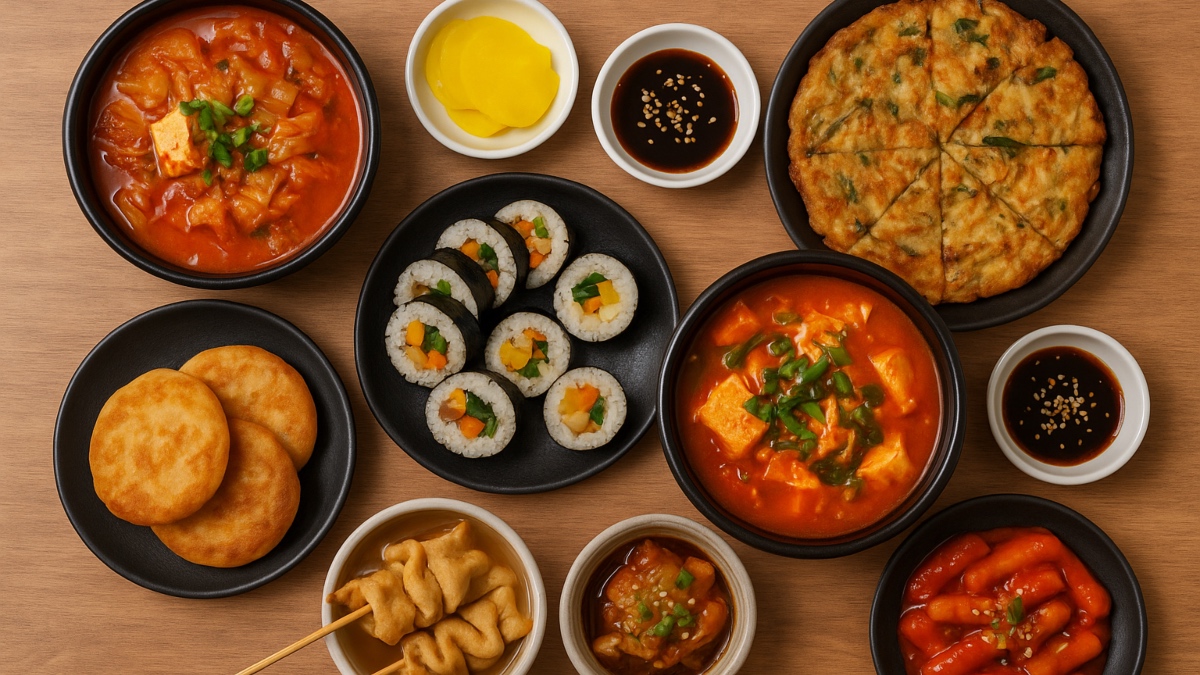
As Korean dramas continue to capture India’s imagination, it’s not just the heartfelt romances and comfort-watch storytelling that pull viewers in — it’s the food. From cosy street snacks eaten on snowy pavements to bubbling stews shared during late-night confessions, Korean dishes have become an essential part of K-drama culture.
While India is already familiar with the basics like ramen (or ramyeon), K-dramas spotlight a far richer food universe. The good news? Most of these dishes are now available in Korean cafés, pan-Asian restaurants and even through home-style delivery kitchens across major Indian cities.
Here are seven Korean dishes you can try in India this winter, what they’re made of, how they taste, and why they’re so beloved on screen.
1. Kimchi Jjigae (Kimchi Stew)
Warm, spicy and deeply comforting, kimchi jjigae is a winter staple in countless K-dramas — often shown simmering away during emotional family scenes.
Made with well-fermented kimchi, tofu, spring onions, gochujang (red chilli paste), garlic and broth, it carries a rich tangy heat that intensifies with slow cooking.
Taste profile: spicy, sour, savoury, with a satisfying depth.
Where to find in India: Many Korean cafés and pan-Asian restaurants in cities like Delhi, Bengaluru, Mumbai, Hyderabad and Pune.
2. Gimbap (Seaweed Rice Rolls)
Often mistaken for sushi but refreshingly different, gimbap appears in K-dramas during school picnics, road trips and cosy date scenes.
It uses seasoned rice, vegetables, egg, pickled radish and sometimes canned tuna or chicken, all rolled in seaweed.
Taste profile: fresh, light, mildly sweet-savory with a crunchy bite from vegetables.
Why fans love it: It’s easy to eat, highly customisable and a perfect winter picnic food.
3. Sundubu Jjigae (Soft Tofu Stew)
This red, bubbling dish — frequently seen warming characters up after a long, cold day — is one of Korea’s most comforting meals.
Made with silky soft tofu, vegetables, chilli flakes (gochugaru), garlic and sometimes seafood or egg, it’s hearty yet incredibly soothing.
Taste profile: creamy, spicy, delicate, with a melt-in-your-mouth texture.
Great for winter: Steaming hot and protein-rich without being heavy.
4. Hotteok (Sweet Korean Pancakes)
Seen in dramas during winter street-festival scenes, hotteok is a crowd-favourite snack.
These pancakes are filled with brown sugar, cinnamon, peanuts or seeds, grilled till crisp outside and gooey inside.
Taste profile: sweet, warm, caramel-like with a hint of spice.
Perfect for: A cosy dessert while binge-watching your favourite series.
5. Dakgalbi (Spicy Stir-Fried Chicken)
A popular dish in many youth-centric dramas, dakgalbi is cooked right at the table — a visual treat on screen.
It features chicken pieces stir-fried with cabbage, rice cakes, potatoes and lots of gochujang, creating a vibrant, fiery skillet.
Taste profile: bold, spicy, slightly smoky, with chewy textures and rich flavour.
Works well for winter: It’s hot, filling and pairs beautifully with simple rice.
6. Jjajangmyeon (Black Bean Noodles)
One of the most iconic dishes in K-dramas — especially during emotional “moving day” or “celebratory meal” scenes — is jjajangmyeon.
It’s made with noodles topped with a thick black bean sauce, diced potatoes, onion and meat or tofu.
Taste profile: savory, slightly sweet, earthy, and deeply comforting.
Why it’s great for India: Its flavour profile is milder and more universally loved compared to spicier Korean foods.
7. Odeng/Garae Eomuk (Korean Fish Cake Skewers in Broth)
You mentioned it — and you’re right: fish cakes are one of the must-have Korean winter snacks.
Often seen in snow-covered street stalls in dramas, odeng are soft fish cakes served on skewers, dipped in a hot, peppery broth.
Taste profile: mild, savoury, slightly chewy, served in a bowl of steaming stock.
Why it’s perfect now: It’s warm, hydrating and very similar in satisfaction to Indian winter soups.
Why Korean Food Works for Indian Palates
Korean cuisine shares several familiar elements with Indian tastes — heat, fermentation, strong spices and warm soups. Many dishes highlighted in K-dramas are comforting, one-pot meals ideal for colder months.
With the growing availability of Korean restaurants and ingredients in India, trying these dishes is easier than ever. Whether you’re recreating iconic scenes from your favourite show or simply craving something warm this winter, these dishes offer a truly authentic K-drama experience.